
Eternl® wallet - Official Cardano light wallet
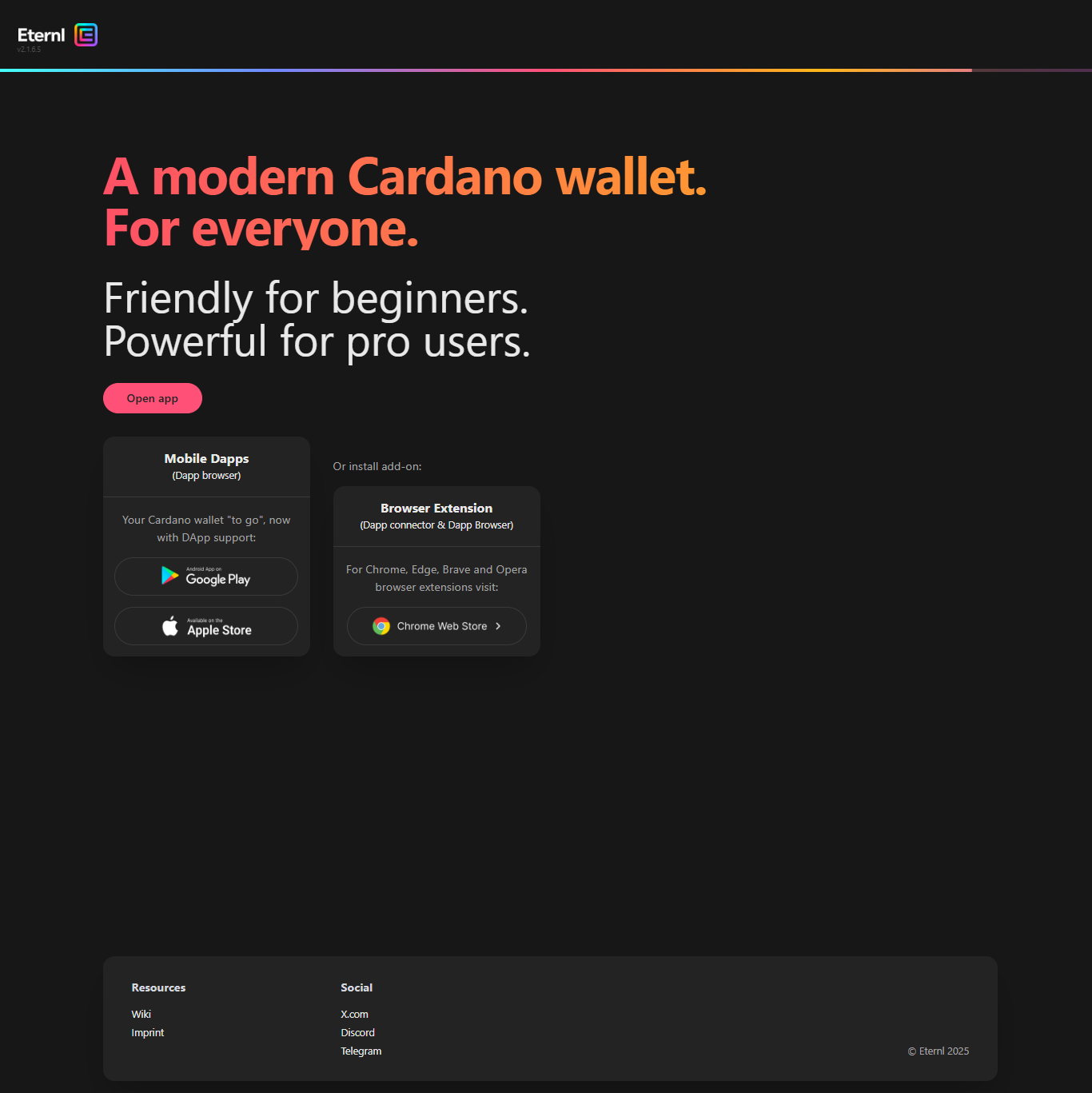
Eternl Wallet is a popular non-custodial cryptocurrency wallet designed primarily for the Cardano ecosystem. It provides users with tools for managing ADA, interacting with Cardano-based tokens, and exploring decentralized applications (dApps). Because it is non-custodial, users retain control of their wallet credentials and assets rather than relying on a centralized exchange.
What Is Eternl Wallet?
Eternl is a Cardano-focused wallet available through supported browser and mobile platforms. Its interface is designed for both newcomers and experienced crypto users who want convenient access to Cardano assets.
With Eternl Wallet, users can generally:
- Manage ADA and Cardano tokens
- Send and receive digital assets
- Connect with supported Cardano dApps
- Stake ADA through supported options
- Monitor wallet balances and transactions
- Manage multiple wallet accounts
Key Features of Eternl Wallet
Non-Custodial Asset Management
Eternl is designed around user-controlled wallet access. Your recovery information is important because losing it can make wallet recovery impossible.
Cardano Staking
Users interested in Cardano staking can use compatible wallet features to delegate ADA to staking pools. Always review pool information and associated risks before delegating.
dApp Connectivity
Eternl can connect with supported Cardano decentralized applications, making it useful for users exploring DeFi, NFTs, and other Web3 services within the Cardano ecosystem.
Multi-Asset Support
Beyond ADA, the wallet can support various Cardano-native assets, giving users a convenient way to organize and manage their Cardano portfolio.
How to Get Started With Eternl Wallet
Before creating or importing a wallet, download Eternl only from a trusted, official source. Avoid links received through unsolicited messages or suspicious advertisements.
A typical setup process includes:
- Install or open the supported Eternl wallet application.
- Choose the appropriate wallet creation or recovery option.
- Securely record your recovery phrase offline.
- Set a strong wallet password or security method.
- Verify the wallet details before depositing funds.
- Start managing your Cardano assets.
Never share your recovery phrase or private keys with anyone. Legitimate wallet support should not require you to disclose them.
Eternl Wallet Security Tips
Wallet security depends heavily on how users protect their recovery credentials. Consider these best practices:
- Keep your recovery phrase offline and private.
- Never enter recovery information on unfamiliar websites.
- Check transaction details carefully before confirming.
- Use official software sources whenever possible.
- Be cautious of fake support accounts and phishing pages.
- Consider additional hardware-wallet security for significant holdings.
Is Eternl Wallet Right for You?
Eternl may be a suitable choice for users who primarily interact with the Cardano ecosystem and want a non-custodial wallet with features for ADA, native assets, staking, and dApp access.
However, compare wallet features, supported devices, security practices, and current compatibility before choosing a wallet for your needs.
Frequently Asked Questions
Is Eternl Wallet free?
The wallet software can generally be used without a subscription, although blockchain transactions and certain network activities may involve fees.
Can Eternl store ADA?
Yes. Eternl is designed for the Cardano ecosystem and supports ADA management alongside compatible Cardano assets.
Is Eternl a non-custodial wallet?
Yes, Eternl is designed to give users control over their wallet credentials and assets.
How do I protect my Eternl Wallet?
Keep your recovery phrase private and offline, use official wallet software, and carefully verify websites and transactions before entering sensitive information.
Final Thoughts
Eternl Wallet offers a feature-rich way to manage ADA and other Cardano assets while interacting with the broader Cardano ecosystem. Its non-custodial approach gives users greater control, but that control also comes with responsibility. By protecting recovery credentials, using trusted software, and verifying every transaction, users can build safer habits while managing their digital assets.
Updated about 2 hours ago